College Choices
Options
Public Universities
Community Colleges
Private Universities
Online College Degrees
Vocational / Trade Schools
International Study Programs
International Studies
Study Abroad
Study in the United States
International Student Loans
When considering your ultimate college destination, you will have to make some basic choices. Are you interested in a public or private university? Will you be more comfortable on a large or small college campus? There are distinct differences between public and private universities. Each has it's own advantages and disadvantages.
Public, or State funded universities operate in whole, or in part, on State and Federal funding. This means that admission must be open to all students, regardless of race, religion, sex or sexual orientation. Private institutions are not bound by this rule, and can operate according to their own regulations. Private colleges may be restrict their student body to men or women, or they may be only open to persons of a certain faith.
Deciding which university is right for you requires careful thought. Right now let's take some time to look at what public and State universities have to offer the college-bound student.
Public universities collect a large portion of their operating funds from Federal and local State governments. This allows them to make tuition costs more affordable to the average student. Also, the all inclusive nature of a public institution's admissions process means a greater variety of students are eligible to attend a given university, helping to keep costs down by attracting a larger student body.
When choosing your college keep in mind that state residents are eligible for further discounts on tuition when they attend an in-state university. These discounts are designed to keep students living, working and spending money within their native state. It makes economic sense for both the college, and the State government, to keep students close to home.
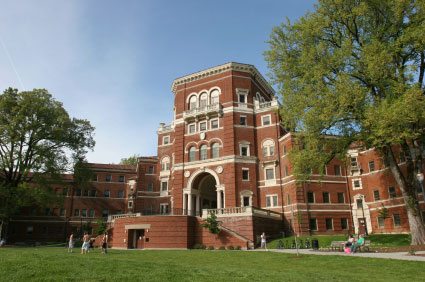
Many of the larger universities in the United States are home to state of the art research facilities, science labs, teaching hospitals and libraries. These facilities attract top teachers and world-renowned professors, giving students the benefit of learning from the best in their field while having access to cutting edge technologies.
How do the large public universities manage these benefits in comparison with their smaller private cousins? Simply put, financial muscle. Large universities maintain their own sizable financial coffers with monies from tuition and endowments. When combined with state and Federal funding, the university gains the financial leverage needed to build and expand their facilities. In this way they develop the best and most competitive learning institutions in the country.
While smaller private colleges are working hard to recruit a wider variety of students, public universities still manage to attract a more diverse student body. Their higher visibility, greater affordability and larger resources make public universities more enticing to college-bound students.
A diverse student body provides students with a deeper educational opportunity. Students will work collaboratively with others from differing background, and in so doing be exposed to other cultures, mores and insights. This diversified atmosphere leads to a greater collective knowledge base, greater opportunities for learning, and a much more satisfying college experience.
Large public universities tend to foster and encourage competition. When students consistently try to best their peers, both the institution and the student body grow stronger. Research reaches new levels and students graduate with top grades and credential. All of which help to build a university's reputation, which in turn helps attract a new wave of young students.
Large public universities can be vibrant educational hubs, but for the wrong student they can also spell disaster. Some students will benefit from a smaller institution that offers less in the way of facilities, but more in one to one instruction. Particularly for students timid about their academics, or who lack a certain level of self-discipline, it can be easy to be lost in the shuffle and fail to thrive on a large college campus.
Undergraduate students may find it harder to get personal attention at a larger university. Many lower level introductory courses are taught by doctoral students, and they may not have the experience to recognize a student who is struggling in class. Larger classes also means less direct interaction with faculty which can leave some students at loose ends when it comes to more difficult course material.
The sometimes chaotic nature of a large university campus can be a little daunting for some students. In most cases college will be the first time a student has been away from home, with all of it's familiar routines and safety nets. For some students it can be easier to acclimatize to the more sedate atmosphere of a smaller private institution.

The admissions process for any college is painstaking, and there is little or no room for error. This is particularly true for larger public universities. Public universities process more applications than their private cousins, and admissions personnel make no allowances for mistakes or oversights. When applying to the college of your choice, make certain your application is complete, on time, and has all of the required documentation attached. Remember, an improperly filled out application will be discarded immediately. Check, double check, and review before submitting you application.